AstroPay Card cancellation

Designing for trust when users need it most
ABOUT ASTROPAY
AstroPay is a global fintech company that enables users to send money, make online payments, and manage prepaid cards through a simple and secure digital wallet. Serving millions of users across multiple markets, the platform focuses on expanding financial access while delivering fast and reliable payment experiences. This project was part of my work improving critical card management flows, where trust, clarity, and security are essential to the overall user experience.
ROLE
Product Designer
TIMELINE
2025
LOCATION
Remote

challenge
The existing card cancellation flow was originally designed to collect users’ cancellation reasons through a mandatory free-text field. While this provided flexibility, it also created a significant challenge for the business. Similar issues were described in completely different ways, making it difficult to identify patterns or understand the main reasons behind card cancellations.
Without structured data, the Product team couldn’t confidently answer questions such as: Why are users cancelling their cards? Are these issues increasing over time? Which problems should we prioritize first?
Looking beyond the product data, we also analyzed Customer Support conversations. We discovered that many users were cancelling their cards for issues that didn’t actually require cancellation, such as payment or PIN-related problems. These situations often resulted in unnecessary support tickets and avoidable card replacements.
This shifted the focus of the project. Rather than simply improving the cancellation flow, the opportunity became designing a smarter decision journey that could guide users to the right solution while generating more meaningful product insights.


process
With a better understanding of users’ needs, we started mapping the most common cancellation scenarios and evaluating the appropriate outcome for each one.
Some situations, like a lost or stolen card, required immediate cancellation. Others could be resolved by providing contextual guidance through the Help Center, allowing users to solve their issue without blocking or replacing their card.
Replacing the open text field with predefined cancellation reasons served two purposes. It simplified the experience during a stressful moment while creating a standardized dataset that Product could use to monitor trends, identify recurring pain points, and make more informed decisions over time.
Throughout the design process, the challenge wasn’t reducing the number of screens. It was balancing three different goals: helping users resolve their issue quickly, reducing operational costs for Customer Support, and giving the business access to reliable data.
Outcome
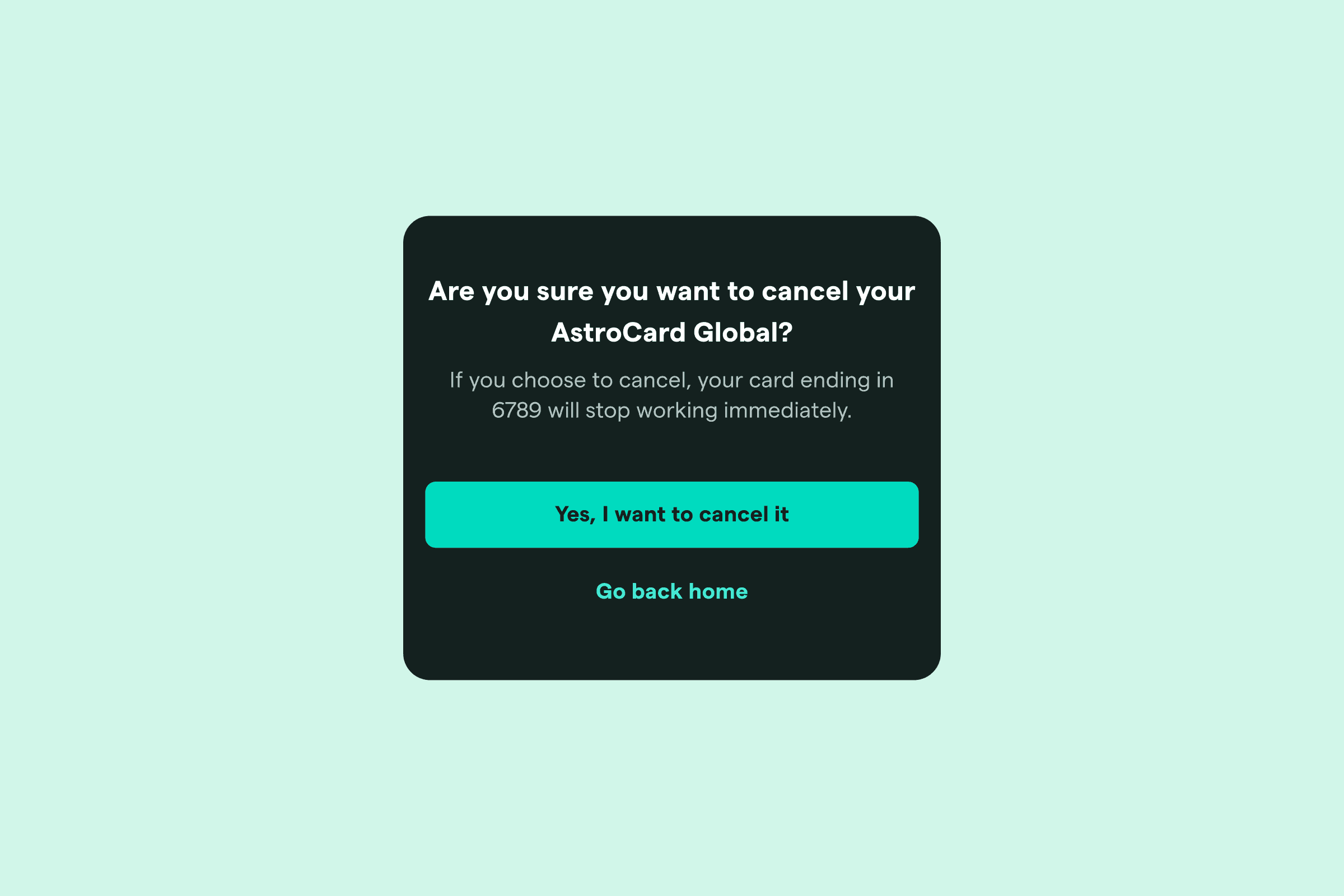
The redesigned experience begins by asking users why they want to cancel their card instead of immediately requesting a written explanation. Based on the selected reason, the flow adapts to present the most relevant next step.
Users who genuinely need to cancel their card can complete the process in just a few taps. For scenarios where cancellation isn’t necessary, contextual Help Center guidance is presented first, helping users resolve common issues without replacing their card.
By restructuring the journey around users’ intent rather than a generic cancellation process, the flow became more helpful for customers while simultaneously improving the quality of the data collected by the business.